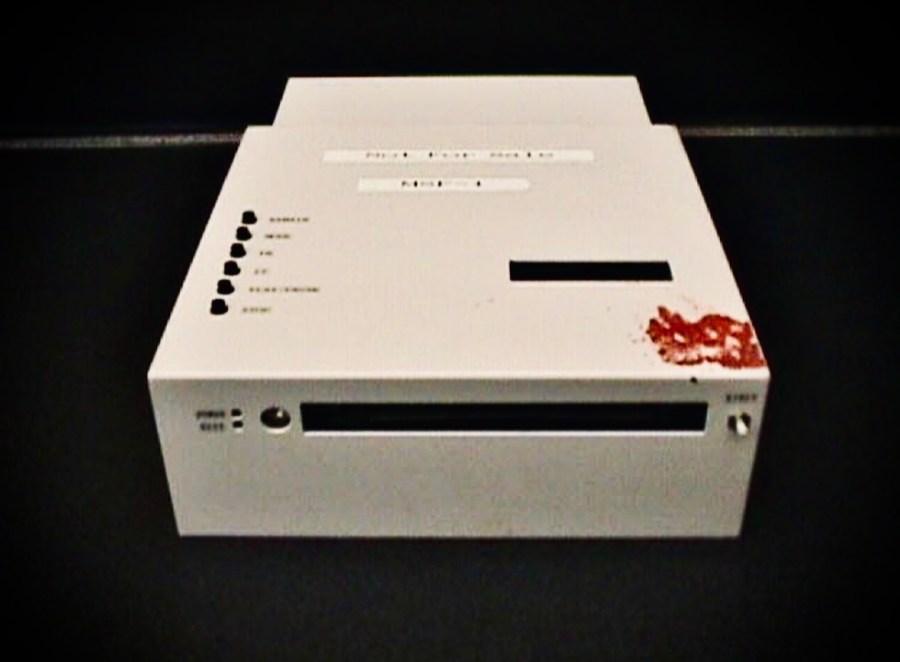
At Classic Gaming Expo 2K in August 2000, I spoke with a friend about the forthcoming publication of the third edition of my book Phoenix: The Fall & Rise of Videogames. One thing led to another and this friend mentioned that he owned a prototype of the infamous Nintendo disk player that was developed by Sony. I asked him if I could include a photo of it in the new book and he agreed and sent me six color images of the unit. Because the book, which was published in July 2001, was black & white, so was the included photo, which I believe was the first time the unit had been printed in any book about videogames.
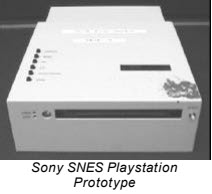
In 2015, after the Nintendo Play Station was found, the world reacted as if this was the first time that this piece of history had emerged, but of course there was a photo of it in my book from fourteen years earlier. But when I looked back at the photo that I had used, I discovered that it wasn’t the same thing. The newly discovered artifact was indeed a prototype while the unit that my friend owned was actually a development kit that had never been mentioned anywhere. The development kit actually predated the prototype. I updated the photo captions in Phoenix IV: The History of the Videogame Industry, which was first published in November, 2016. The photo was again in black and white but a color edition of the book appeared in July, 2017.
In 2020 a journalist from IGN contacted me for quotes for an article about the Telstar Arcade that they were writing. Soon after the article was published in July 2020, my friend Rob Far, a game industry veteran and historian, decided to write a serious history piece about the “Nintendo Play Station.” I contacted the author of the Telstar piece to pitch it to IGN, and they forwarded it to an executive editor at IGN who was very interested in it. However, instead of an article, after doing research on me, they decided they wanted to shoot a documentary about my life, intertwined with the Play Station story.
Things began happening rapidly. They were interested in including my friend’s demonstration unit but when I contacted him he said the timing wasn’t right and he kept pushing it forward and forward until we finally gave up on him coming through.
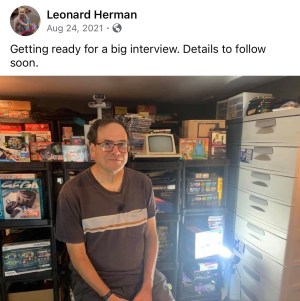
IGN finally interviewed me in August, 2021. It had to be done via Zoom because Covid was still lingering. Several months passed and in early 2022 we learned that the executive editor who had championed the project had left IGN and the project was dead. Just like that.
Rob decided to go ahead and complete the article but I bowed out. IGN was interested in it initially but then they gave him the runaround and the piece has been sitting dormant since. In light of the recent museum acquisition of the MSF-1, I persuaded him to let me publish his piece here.
*****************************************************************************
The Other Nintendo Play Station by Rob Far
This whole thing started with Three Dirty Dwarves, a middling beat ‘em up developed for the Sega Saturn console. Back in 2018, I spoke to someone who claimed to have played final or near-final code of an unreleased port for the Sony PlayStation console, Saturn’s competitor, and I wanted to learn more. Developer Psygnosis, owned by Sony, had ported a handful of early PlayStation exclusives to the Saturn. It seemed as though SegaSoft was established in response to this somewhat unconventional arrangement and would release games, such as Three Dirty Dwarves, on platforms other than Sega’s. This unreleased port seemed to be a relatively straightforward translation of the Saturn original (it was also on PC), and turned out to be the least interesting part of our conversation.
This industry veteran, whom you would certainly never have heard of, had several interesting stories from the mid-90s that I wish I could share. But it was the last one that blew me away, igniting years of pain, bullshit, and personal agony, but here it is, finally, for all to see. Here’s my story about what the vet described as a total urban legend: the so-called Nintendo Play Station.
Nintendo-Sony Partnership
In 1989, a commercial masquerading as a film was released, and it was called The Wizard. It’s best remembered for heavy Nintendo product placement and the high-profile introduction of Super Mario Bros. 3 for the Nintendo Entertainment System (NES) to North American audiences. It’s not a good film, but it does a great job of illustrating Nintendo’s era of dominance. As Nintendo readied the game for a North American release in 1990, it was also planning the launch of the successor to the Famicom (NES in Japan), which it would imaginatively call the Super Famicom (Super Nintendo Entertainment System in North America).
During the development of the Super Nintendo, Sony, a similarly dominant consumer electronics giant, was developing the system’s sound chip, whether it knew it or not. This critical component would differentiate the system from its competitors. Development was led by Ken Kutaragi, who would later become the primary force behind the creation of the commercially released Sony PlayStation. Around the same time, Nintendo and Sony agreed to collaborate on videogame hardware and software. According to the book, Revolutionaries at Sony, written by Reiji Asakura, “The initial idea was to connect a CD player to the Super Famicom using an external digital interface, but the specifications were later changed to include a built-in CD-ROM drive. A built-in drive was favored because connecting separate units with a cable was inelegant and, more important, would be inconvenient for the user.” Asakura goes on to state, “Eventually, Sony and Nintendo agreed that Sony would produce a game machine with a built-in CD-ROM drive, and Nintendo would produce a CD-ROM adapter for connecting a drive to the Super Famicom.” The console would support Super Nintendo cartridge games and a CD-ROM format called Super Disc. The CD-ROM was poised to become the dominant videogame media format for the 1990s, replacing expensive cartridges, with Nintendo and Sony primed to lead.
Numerous sources have reported that the agreement wasn’t favorable to Nintendo, particularly regarding software, so they found a way out by partnering with Sony’s Dutch competitor, Philips, in 1991. This was announced months before the Super Nintendo would be released in North America, and shortly before Sony announced the Play Station console at Summer CES. This maneuver by Nintendo effectively killed the project, although it wouldn’t be retired immediately. While the precise duration is unclear, Sony still wanted to release the Play Station, but eventually dropped it in favor of the Sony PlayStation console.
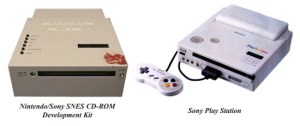
Interest in the remnants of that partnership seems to have increased with the discovery of former Sony Computer Entertainment CEO Olaf Olafsson’s pre-production unit in 2015. It was a significant find, but it looked nothing like the unit I had seen in the seminal videogame history book Phoenix nearly 15 years before. Unlike Olafsson’s unit, which was an all-in-one Play Station, the one shown in Phoenix was a development unit that plugged into the cartridge port of a Super Nintendo. An artist’s rendering of the Super Nintendo CD-ROM add-on, which appears to be the hardware Nintendo was developing with Philips, depicts the peripheral plugging into the bottom of a stock Nintendo system.
Here are some exclusive photos of the development unit provided by videogame historian Leonard Herman. Additional images can be found in print and online with minimal effort.
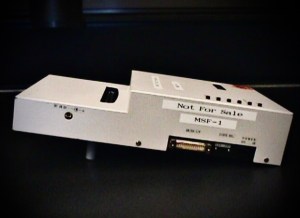
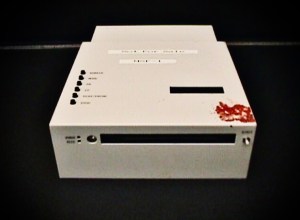
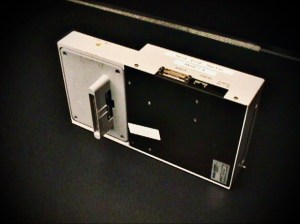
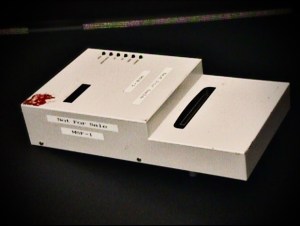
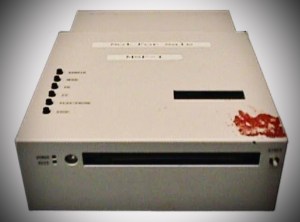
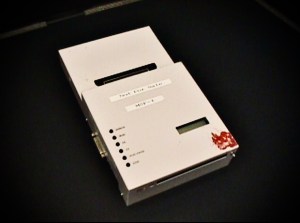
The Development Unit
The Sony PlayStation console launched in North America on September 9, 1995, and was an instant hit. Although Sony knew how to sell consoles, my Three Dirty Dwarves source observed that it was still trying to figure out the videogame business. He described the atmosphere as reminiscent of the 2006 film Grandma’s Boy, a comedy about a group of rowdy videogame testers.
One day in late 1995, likely a month after the PlayStation launch, an executive showed off the Nintendo Play Station developer unit, labeled MSF-1, around some of Sony’s offices. The old Play Station didn’t seem to impress the Sony employees who saw it, perhaps because few were familiar with the failed partnership. But they were curious enough to take it into an interior office during a five-minute break for a closer examination.
The person’s office where they examined the unit was from Sony Imagesoft, a development company active during the 8- and 16-bit eras, and he was one of the people in charge of quality assurance at this location. He confirmed that they had the unit and that during a move, Imagesoft had just been or was being phased out, among other corporate restructuring efforts Sony was making at the time – they threw it in the trash before a colleague saved it.
Brian Wiklem, who joined Sony Imagesoft in the early 1990s, was the one who saved the Nintendo Play Station developer unit from destruction. “We had a bunch of stuff that had come over from the Sunset building (Sony Imagesoft’s former office on Sunset Boulevard), and as we were packing up to move, there was a bunch of stuff that was just kind of earmarked for the trash,” Wiklem said. “I had always seen it around, but I’d always wondered what was this big white box that had a Nintendo cartridge port on it.” That’s when Wiklem’s boss, one of the first Imagesoft employees, explained the partnership to him and identified the hardware as a development unit. “None of us at the time really considered the historical aspects of it,” Wiklem added.
Wiklem didn’t like the idea of throwing away big pieces of hardware, so he saved the unit from the trash and kept it on an upper shelf in his office. He didn’t even remove a splash of red paint on the front, which I assumed was damage from being thrown away. “It wasn’t physically in a garbage can or anything. It was just in a pile of stuff that was going to eventually be dumped,” he clarified. “There was nothing with it – there was no software, there was no connectors, there was maybe a CD-ROM caddy, but it wasn’t a proprietary caddy.” While it doesn’t appear that CD-ROM caddies (protective cases for discs) were associated with the Nintendo Play Station, enthusiast magazine Electronic Gaming Monthly (EGM) reported that caddies would be used with the CD-ROM add-on Nintendo was developing with Philips. The Sony production and developer units appeared to be designed to accept discs without the need for a caddy, which would have been more in line with Sega and NEC’s contemporary CD-ROM offerings.
Wiklem eventually met a handful of Sony employees who shared a love for classic videogames. One of them started hosting classic gaming meetups, and at that time, Wiklem came to a realization. The host of the meetup had a passion for game history and a technical background, which made him the ideal person to maintain the unit for preservation purposes. Wiklem gave the Nintendo Play Station developer unit to this person, who must have been happy to accept the gift.
Nintendo Play Station Software
Little is known about the complete lineup of planned software for the Nintendo Play Station, but a few titles have been associated with the system. EGM reported that educational software would be released, including National Geographic’s Mammals of the World, Mixed-Up Mother Goose, Software Toolworks World Atlas, Microsoft’s Bookshelf 1991 edition, and a music sampler. This selection seemed to reflect Sony’s vision of Play Station as a multimedia experience, extending beyond games. A port of The 7th Guest, an interactive movie game, has been reported, but it is unclear whether any work had begun. It appears to have been targeted at the project Nintendo was pursuing with Philips, rather than the original Sony system. I spoke to a member of The 7th Guest’s development team, but that conversation didn’t yield any specifics. Another title that seemed to be targeting the Philips project, Secret of Mana, is an RPG released for the Super Nintendo. It’s been reported that the CD-ROM content was cut considerably so that it could fit on a Super Nintendo cartridge at an affordable price. A translated interview claims Secret of Mana was “scheduled as a CD game for the Sony CD-ROM SNES add-on that never appeared,” but I suspect the interviewee meant Philips.
In addition to courting third-party support, Sony was developing games in-house for the system. Wiklem was familiar with three or four games in development for the Nintendo Play Station, and spoke about the two he could recall: Forteza and Hook.
Forteza was developed as “a space-based pre-rendered CGI rail-based shooter,” according to Wiklem. “You were in outer space near asteroids and other things. The ship and some of the other things that you shot were bitmap graphics overlaid onto CG backgrounds.” It seems that Forteza was prioritizing spectacle over substance, showcasing the capabilities of the new medium, much like Silpheed for Sega CD, which features a very similar graphical presentation to the one Wiklem described. Unfortunately, Wiklem wasn’t able to play Forteza. “I saw a videotape that had, I believe, five or ten minutes of footage on it. No sound, no music, no nothing else. That was the extent of it.” Forteza remains unreleased and unseen.
Hook, based on the 1991 film of the same name, seemed to have had the potential to be a system seller in Sony executives’ eyes. This bleak film adaptation of Peter Pan was directed by Steven Spielberg, who was still at the top of his game, and starred Robin Williams, with a score by John Williams, no relation.
“From my understanding, it was the Super Nintendo game but with CD-quality music and scenes from the motion picture,” said Wiklem. “That content migrated to the Sega CD version,” he added. The Sega CD version of Hook isn’t a great game, but the quality of the presentation and gorgeous soundtrack are hard to ignore. While Secret of Mana is a scaled-back version of a title intended for the CD-ROM format, it seems that Hook for Sega CD is the closest we will get to experiencing a full Nintendo Play Station game as intended.
Five Minutes Alone
When the employees in the Grandma’s Boy area took the development unit into an office for a closer look, it wasn’t to admire the fine Japanese craftsmanship. They hooked the Nintendo Play Station development unit up to a television and played a game. That game was Mickey Mania, a title published by Sony Imagesoft and released for 16-bit systems in 1994, the same year the PlayStation launched in Japan. Imagesoft also seemed to have contributed to the game’s development. This version was described as having Super Nintendo-quality graphics with a CD-quality score. The description reminded me of the commercially released Sega CD version of the game, which featured Sega Genesis-quality graphics and a CD-quality soundtrack. It was likely booted from a CD-ROM rather than from internal storage or other media.
Corroborating what could be the most important smoke break in videogame history has been difficult, and it’s the only detail from my Three Dirty Dwarves source that I haven’t been able to confirm. I was given the names of two people in the room – one named Jose, a tester, and the other, Andrew, the marketing executive who was showing off the unit. I suspect that “Andrew” is the well-known former Sony executive, Andrew House. This odd, incomplete bio I found seems to place him there: “In April 1995, he was assigned to the marketing and communications division of SCEI, contributing to the marketing and promotion of the original PlayStation computer entertainment system as well as its game titles.” Attempts to get in touch with him and the executives involved in the Nintendo Play Station deal have been unsuccessful, resulting in either a no-go or a no comment. However, I was fortunate enough to speak to a few people involved in Mickey Mania’s development. They either had never heard of a planned Nintendo Play Station version or flatly denied that it ever existed. As our interview was concluding, Wiklem indicated that he would discuss the claim with his former boss at Imagesoft. “You know this shit I heard today? Someone said this game was a fucking Play Station title. That’s such bullshit!”
I went back to my Three Dirty Dwarves source and communicated the denials. I was also concerned that they might be misremembering a build of Mickey’s Wild Adventure, an enhanced version of Mickey Mania released for Sony PlayStation outside of North America. Could they have been playing it on a common PlayStation debug unit? The Three Dirty Dwarves source reiterated the story and definitively stated their experience was with the Nintendo Play Station developer unit, which is why the event stood out with such clarity.
Which credible former Sony employee should be believed? I’ve seen nothing that definitely favors one claim over the other, but certain circumstantial details stand out. The unit came from the offices of Sony Imagesoft, and Mickey Mania is an Imagesoft game. Many Sega CD games, including Mickey Mania and Hook, were essentially enhanced 16-bit cartridge games with CD-quality sound, similar to the description of the possible Nintendo Play Station version. The Mickey Mania Super Nintendo cartridge also features loading screens between levels, similar to those found in CD-ROM games of the era. At the very least, it doesn’t seem impossible that a curious developer could have taken the Super Nintendo code and replaced the audio files with Sega CD tracks to create an experimental demo or proof of concept. Or, maybe it is too good to be true, or “bullshit,” as Wiklem said.
The Mystery Continues
When I started this story, I arrogantly assumed I would uncover everything there is to know about the Nintendo Play Station. That wasn’t the case, and the reality is that we’ll probably never have the complete picture of the failed partnership, nor will we have a firm accounting of all hardware, software, and paperwork that could have survived. Many people who could fill in those gaps declined to speak or were unreachable, but I hope that changes.
In the meantime, there’s still more to be uncovered. It isn’t clear whether the Forteza footage on VHS still exists, but that’s one loose end that desperately needs to be tied up. No matter the quality, footage of an actual Nintendo Play Station game in action would be incredible to watch and important for videogame history — but perhaps not as incredible as tracking down the remaining pre-production units.
“I know that there was a second unit* also that was in (former Sony CEO) Mickey Schulhof’s office,” Wiklem said. “I don’t know what happened to that, if anything. Maybe it’s still there, maybe it was shipped back to Japan, maybe it’s in his house. Don’t know.”
If Shulhof’s unit had been shipped back to Japan, it would have likely been reunited with other consoles. “It’s my understanding there were approximately 20 or so put together, and the majority of them are in Japan,” Wiklem claimed. “If I’m not mistaken, I think there’s probably five or ten of ‘em sitting in a history museum or something that Sony maintains or an archive of some kind.”
As for the developer unit, it’s probably a one-of-a-kind, according to Wiklem. “I’ve never talked or met with anybody that’s ever seen or had one.”
*In early 2025, it was reported that Ken Kutaragi still has a pre-production unit, differing slightly from Olafsson’s and seemingly in better condition.


 The Game Scholar